Are you the kind of person who thrives in self-paced learning, brave enough dives straight in, teaches yourself, and YouTubes your way through new tools?
Or are you like me…curious, but needing a curated path and validation from someone braver, more experienced, and a little ahead of the learning curve?
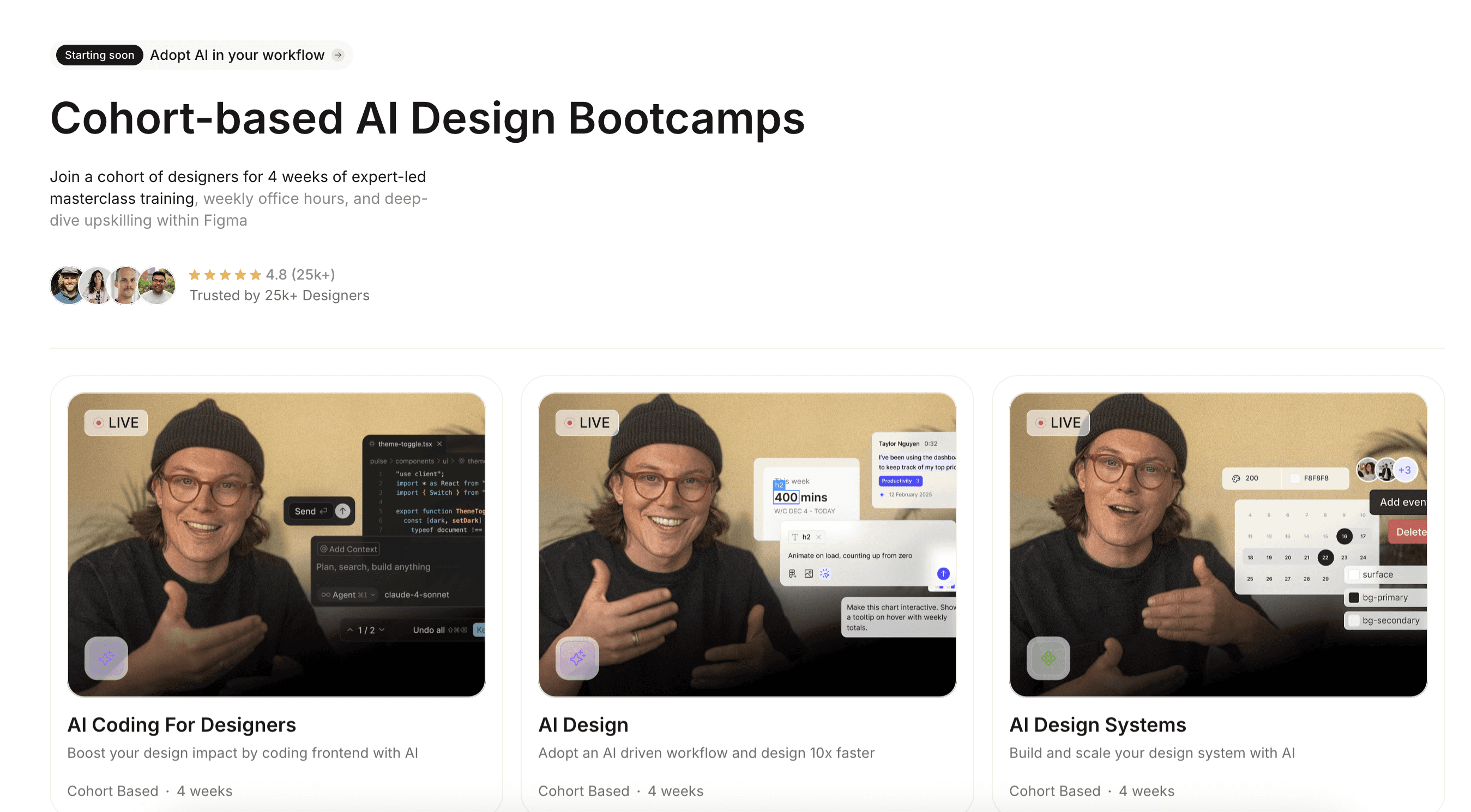
I love doing homework. I love experimenting. But I also need direction. That’s why I chose this course from Memoriesly. At its core, the course offers a foundational framework for designing in a new product era, the one can answer the real question
“Can AI do this?” and “How should we work with it?”
From Design Thinking to AI-Native Design
It’s been over a decade since the rise of frameworks like the Design Sprint. They gave teams a shared language for collaboration and a structured way to move from ambiguity to tested solutions.
But AI changes a fundamental assumption: thinking is no longer scarce. Generating is cheap (for get about ai subscription here). Judgment/Decision is not.
This course reframes design as less about rigid process and more about intent. Specifically, how clearly we can articulate it so intelligent systems can collaborate with us.
RTCCF: Framing as a First-Class Skill
At the center of the course, There is RTCCF:
Role · Task · Context · Constraints · Format
Instead of treating AI like a magic box, RTCCF forces designers to:
Externalize their thinking
Be explicit about intent
Introduce constraints early
Shape outputs deliberately
The course emphasizes conversational prompting, iteration over perfection, and most importantly, human judgment as non-negotiable. AI can be fast, persuasive, and confidently wrong. Framing is what keeps it useful.
What Actually Changes
Traditional design thinking is process-led. AI-native design is intent-led. Instead of a linear flow, the work becomes a loop:
Frame Intent → Generate Options → Judge & Refine → Repeat
Designers spend less time generating ideas and more time choosing, refining, and contextualizing them. Prototypes evolve faster. Decisions are informed by a much wider explored surface area.
What Designers Do Now
This course makes one thing clear: Designers don’t disappear. We are shifting.
We become:
Framers of problems
Editors of AI output
Curators of possibilities
Judges of quality, ethics, and relevance
The highest-leverage skill is no longer speed of execution. It’s clarity of intent.
Why Design Thinking Still Matters
AI-native design doesn’t replace design thinking. We still need our brain because:
Empathy still matters.
Users still matter. (they are not a robot)
Context still matters.
The difference is that these values are no longer trapped in workshops and decks. They’re encoded directly into prompts, constraints, and framing decisions. RTCCF is essentially design thinking made executable.
Final Takeaway
Design thinking taught us how to ask better questions. AI design rewards those who can ask them clearly enough for machines to help answer them.
And for someone like me…who needs both curiosity and structure. This class may opens up your perspective on AI way of design frame work.
Hey! meet my new friend that I MADE during class!
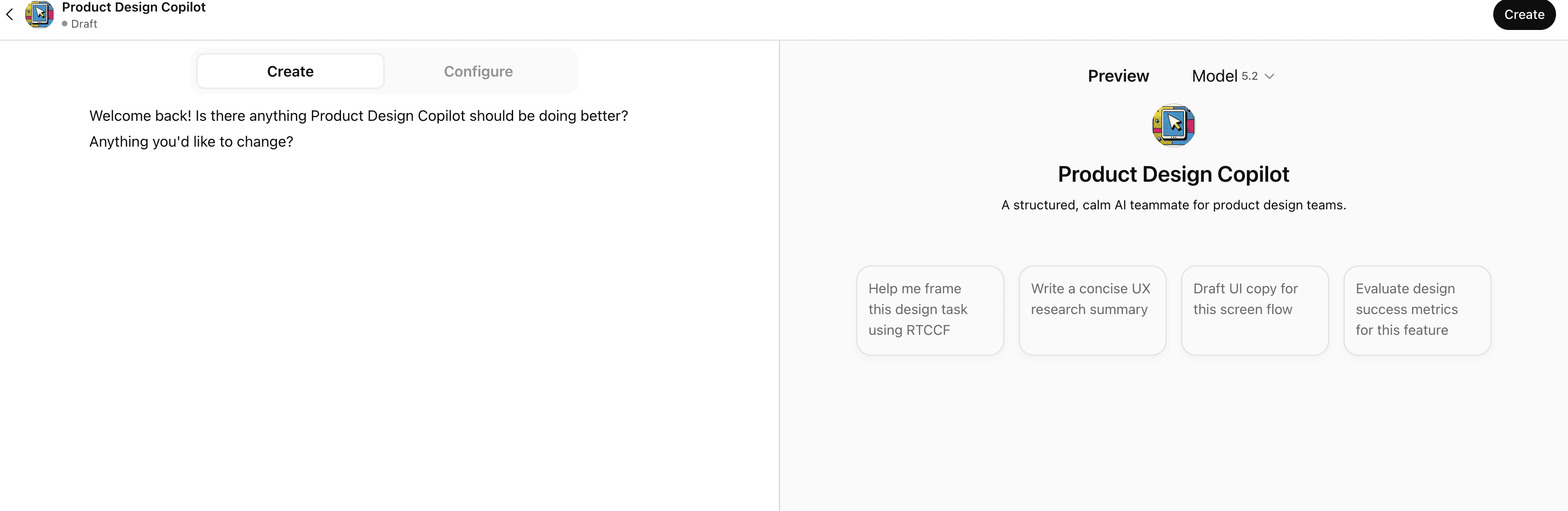
Link to course: https://www.memorisely.com/online-figma-bootcamps/ai-powered-product-design-bootcamp
Are you the kind of person who thrives in self-paced learning, brave enough dives straight in, teaches yourself, and YouTubes your way through new tools? Or are you like me…curious, but needing a curated path and validation from someone braver, more experienced, and a little ahead of the learning curve?